Looking for the best VoIP provider in Canada? There are plenty of choices, but finding the right one depends less on which company has the longest feature list and more on how you actually use your phone.
Someone replacing an expensive traditional home phone has very different needs from someone who wants to text from their VoIP number, make calls from a smartphone, regularly call family overseas, run a small business, or simply keep a phone number they’ve had for decades.
That’s why there isn’t one VoIP provider that’s best for every Canadian.
In this guide, we’ll compare some of the major options available in Canada including NetJOI, Fongo, Ooma, VoIP Much, magicJack and VoIP.ms and, more importantly, help you figure out which providers make the most sense for you.
Best VoIP Providers in Canada at a Glance
| Provider | Best For | Service Style | Something to Consider |
|---|---|---|---|
| NetJOI | Straightforward home phone replacement | Digital home phone using your existing Internet | Not designed as an SMS or app-first service |
| Fongo | Low-cost home phone or app-based calling | Separate Home Phone and Mobile services | Decide whether you actually want Home Phone or Mobile |
| Ooma | Home phone with mobile integration | Ooma hardware + smartphone app | Some functionality depends on service level |
| VoIP Much | Flexible home/SOHO use | Home phone, softphones and BYO equipment | More options than a basic plug-and-play service |
| magicJack | Device + app portability | Proprietary device + companion app | Canadian numbers and number transfers may involve additional fees |
| VoIP.ms | Advanced and DIY users | Highly configurable VoIP/SIP platform | More technical than conventional home phone |
The important difference isn’t simply price. These services approach Internet-based calling in very different ways.
So before choosing a provider, start with a simpler question.
How Do You Actually Use Your Phone?
“I Just Want to Replace My Expensive Home Phone”
This is probably the most straightforward reason to switch to VoIP.
You already have a regular cordless or home telephone. You want to keep your existing number, make and receive ordinary calls, get voicemail and caller ID, and preferably avoid turning the whole thing into a technology project.
For this type of customer, prioritize number portability, Canada-wide calling, 911, straightforward equipment and easy setup.
Providers to consider: NetJOI, Fongo Home Phone, Ooma and VoIP Much all offer services designed to work as replacements for a conventional home phone. Fongo currently describes its Home Phone service specifically as working like a traditional landline, while VoIP Much supports regular or cordless phones through an ATA as well as other devices. (Fongo)
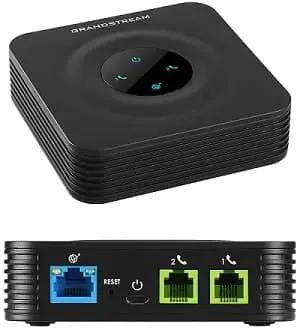
NetJOI is designed around this use case too: keep your regular phone, connect it to a pre-configured ATA adapter, and use your existing Internet connection.
☎️ Start Here If You Just Want Home Phone
Don’t get distracted by dozens of advanced VoIP features. If your goal is simply to replace your existing home phone, focus first on keeping your number, the places you call, equipment, 911 and ease of setup.
“I Barely Use My Home Phone, But I’ve Had the Number Forever”
This is a completely different problem.
Maybe the physical telephone hardly rings anymore, but you’ve had the number for 15, 20 or 30 years. Friends and family know it. It’s attached to accounts and services. Giving it up feels unnecessary.
In that case, you may not actually need home phone service. You need to keep the number.
Prioritize number portability, call forwarding, voicemail and easy online management rather than paying for an adapter and calling service you don’t really use.
Provider to consider: NetJOI’s Keep My Number service was built specifically for this scenario. You can transfer an eligible number to NetJOI without having an ATA or physical home phone, then manage incoming calls through forwarding or voicemail.
Other virtual-number and VoIP services can also provide number-management capabilities, so compare exactly what happens to incoming calls and how easily you can change the destination.
☎️ Had the Same Number for Years?
Keeping your number doesn’t necessarily mean keeping another telephone in your house. If the number matters more than the physical phone, look for a service that lets you keep it and manage incoming calls through forwarding or voicemail.
Keep Your Number with NetJOI ›
“I Make Lots of Calls Across Canada or to the U.S.”
Start with where you actually call.
If almost all your conversations are within Canada, look for included Canada-wide calling and check whether there are excluded destinations or fair-use limits.
If you regularly call the United States, a service that includes Canada and U.S. calling may make considerably more sense than choosing the cheapest Canadian plan and paying additional long-distance charges.
Providers to consider: NetJOI offers separate calling options depending on whether you need Canada or Canada/U.S. calling. Fongo Home Phone currently includes Canada/U.S. calling, while VoIP Much includes Canada/U.S. calling subject to its stated geographic and fair-use exclusions.
Ooma and magicJack are also worth comparing if Canada/U.S. calling is a major part of how you use your phone.
The lesson is simple: don’t pay for international packages or advanced features if Canada-wide calling is really all you need.
“I Regularly Call Family Overseas”
For international callers, the cheapest monthly home-phone plan isn’t necessarily the cheapest phone service.
Start with the countries you actually call.
Check whether those destinations are included in a calling plan, what the per-minute rates are if they’re not, and whether rates differ between landline and mobile numbers. Someone who calls India every evening may make a very different choice from someone who calls the United Kingdom twice a month.
Providers to consider: NetJOI offers JOI International as well as international calling rates for individual destinations. VoIP Much publishes destination-specific international rates, while VoIP.ms is particularly flexible for customers comfortable with usage-based calling. Ooma also offers international calling through its home-phone service and mobile app.
And yes, VoIP can call ordinary telephone numbers in other countries. The person you’re calling doesn’t need the same provider and doesn’t need to use VoIP at all. You can call regular home phones, mobile numbers and other Internet-based telephone numbers, provided your service supports the destination.
🌍 International Caller?
Don’t compare providers by monthly price alone. Compare the actual countries and types of numbers you call. A few cents per minute on frequent international calls can matter more than a couple of dollars in monthly plan price.
“I Want My Home or Business Number to Ring My Cellphone”
You don’t necessarily need mobile VoIP for this.
If you simply want incoming calls to your home or small-business number to reach your mobile when necessary, call forwarding may be enough.
Look for forwarding to external numbers, no-answer forwarding, simultaneous or sequential ringing, voicemail and an easy way to manage those settings.
Providers to consider: NetJOI supports several forwarding options, including forwarding calls to another number, voicemail, or multiple numbers. VoIP Much includes a broad range of calling features, while configurable platforms such as VoIP.ms provide considerably more sophisticated routing options.
For a small business, think about when calls need to be forwarded too. If you need calls to ring the office during business hours and automatically route somewhere else after closing, you’ll need scheduled or time-based routing. Not every residential phone service supports that.
“I Want My VoIP Number on My Smartphone”
Now we’re talking about a different type of requirement.
Forwarding your home-phone calls to a cellphone is not the same as having your VoIP service on your cellphone.
If you want to make calls from an app using your VoIP number, receive calls directly in that app, check voicemail while away from home or otherwise carry your home-phone service with you, mobile and softphone support should be one of your requirements from the beginning.
Providers to consider: Ooma has a dedicated Home Phone app that lets customers make calls through their Ooma account, with incoming mobile calling available with certain service levels. Fongo Mobile is specifically designed around app-based calling and messaging, while VoIP Much allows customers to use PC or mobile softphones. VoIP.ms can also be paired with compatible SIP applications and integrations, but is a more DIY approach.
NetJOI Digital Home Phone, by comparison, is primarily designed as a home-phone replacement, not an app-first phone service.
📱 Mobile VoIP ≠ Call Forwarding
Want calls to your home number to reach your cellphone? Call forwarding may be enough.
Want to make calls from your cellphone using your VoIP number? You need a provider that supports a mobile app or softphone.
That’s an important distinction to make before you transfer your number.
“Text Messaging Is Important to Me”
Don’t assume that because a telephone number uses the Internet, it automatically behaves like a mobile number.
Some VoIP providers support SMS or MMS. Others don’t. And even when texting is supported, short codes and verification messages can have limitations.
Providers to consider: VoIP.ms supports SMS and MMS on eligible Canadian and U.S. numbers, including management through its web interface, although it specifically warns that short-code and 2FA messages aren’t guaranteed. VoIP Much introduced SMS for its home and business phone plans in 2025; its current implementation supports text messaging through its portal, while MMS isn’t supported. Fongo Mobile offers messaging and optional Canada texting functionality.
NetJOI does not currently provide SMS as part of its digital home-phone service.
If texting is essential to you, treat that as a must-have rather than discovering the limitation after you’ve transferred your number.
“I Need Phone Service for My Small Business”
First decide whether you need a business telephone number or a business phone system.
Those aren’t the same thing.
A small shop, consultant or home business that needs a Canadian number, voicemail, regular calling and the ability to forward customer calls to a mobile phone may be perfectly happy with straightforward digital phone service.
Providers to consider for simpler requirements: NetJOI and VoIP Much can both fit straightforward small-business use cases. VoIP Much also offers dedicated business and Virtual PBX services if your requirements grow.
If you need multiple employees, extensions, an auto-attendant, call queues, scheduled routing, call recording, business SMS or integrations with other business systems, look at dedicated business VoIP/PBX services. VoIP.ms also offers the configurability and integrations that more advanced users may want.
Don’t pay for a complicated business phone system if all you need is a number and call forwarding. But don’t try to make residential home phone do the job of a full PBX either.
Which Providers Should You Consider?
Here’s the short version:
| If this sounds like you… | Providers to start with |
|---|---|
| I just want to replace my home phone | NetJOI, Fongo Home Phone, Ooma, VoIP Much |
| I want to keep my number but ditch the physical phone | NetJOI Keep My Number, plus virtual-number/forwarding services |
| I make lots of Canada/U.S. calls | NetJOI, Fongo Home Phone, VoIP Much, Ooma, magicJack |
| I regularly call internationally | NetJOI, VoIP Much, VoIP.ms, Ooma |
| I want calls forwarded to my cellphone | NetJOI, VoIP Much, VoIP.ms |
| I want my VoIP service on my smartphone | Ooma, Fongo Mobile, VoIP Much, VoIP.ms |
| SMS/texting matters | VoIP.ms, VoIP Much, Fongo Mobile |
| I need straightforward small-business phone service | NetJOI, VoIP Much |
| I need extensions, queues and advanced routing | Business VoIP/PBX or configurable services such as VoIP.ms |
This isn’t a ranking. It’s a starting point based on the capabilities that matter for each type of customer. Always confirm current features and whether your particular telephone number can be transferred before ordering.
A Closer Look at Popular VoIP Providers in Canada
NetJOI – Straightforward Digital Home Phone
NetJOI is a Canadian digital home-phone provider focused primarily on replacing conventional residential phone service. It works with any suitable Internet provider, lets customers transfer eligible existing telephone numbers and supports regular home telephones through an ATA adapter.
Customers can choose calling options based on whether they primarily call within Canada, Canada and the U.S., or selected international destinations. NetJOI also offers Keep My Number for people who want to retain an existing number without maintaining a physical home phone.
Best fit: Someone who wants straightforward home phone, number portability and personal support from a small Canadian team.
Look elsewhere if: SMS or an app-first phone experience is essential.
Fongo – Low-Cost Home Phone or Mobile Calling
Fongo offers two distinctly different consumer options, which is important when comparing it with other providers.
Fongo Home Phone is an adapter-based service intended to replace a traditional telephone and currently includes Canada/U.S. calling and number-transfer capability. Fongo Mobile, meanwhile, is an app-based service offering a Canadian number, calling and messaging on smartphones and other supported devices.
Best fit: Cost-conscious consumers, but first decide whether you actually want a physical home-phone replacement or an app-based phone service.
Ooma – Home Phone with Stronger Mobile Integration
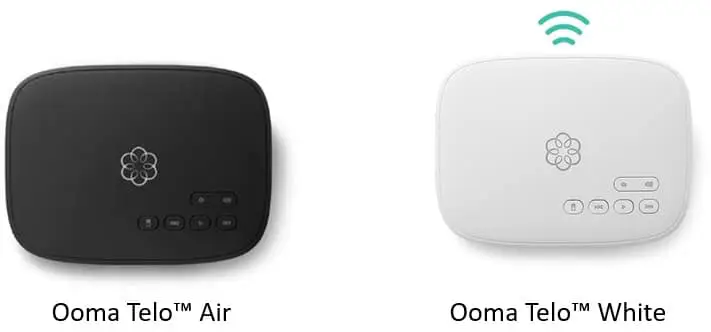
Ooma Canada combines dedicated home-phone hardware with a smartphone ecosystem.
Its Home Phone app allows customers to make calls through their Ooma account while away from the physical home phone, and some incoming mobile functionality depends on the service level. That makes Ooma particularly interesting for households that still want a conventional telephone at home but also want their service to extend onto a smartphone.
Best fit: Someone who wants to retain the home-phone experience while adding stronger mobile integration.
VoIP Much – Flexible Home and SOHO Phone
VoIP Much sits somewhere between a straightforward home-phone service and a more configurable VoIP platform.
Its residential service supports regular telephones through an ATA, IP phones, PC and mobile softphones, and customers can buy an adapter or bring compatible equipment. Canada/U.S. calling and a broad collection of calling features are included, and the company added SMS functionality to its home and business plans in 2025.
Best fit: Home or small-office users who want more flexibility over devices and features without moving all the way into a DIY VoIP platform.
magicJack – Device and App Portability
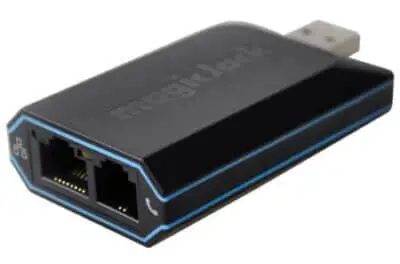
magicJack takes a somewhat different approach, combining its proprietary device with a companion app.
Its current magicJackHOME offering includes service with the device, common features such as voicemail and call forwarding, a companion app, and Canadian number porting. Canadian telephone numbers and number transfers can involve additional fees, so Canadians should compare the complete service rather than looking only at the headline device price.
Its emergency-calling rules are also worth understanding: magicJack states that E911 requires registration of the service address and that its app itself does not provide emergency calling.
Best fit: Someone specifically attracted to the magicJack device-and-app model.
VoIP.ms – Maximum Flexibility for Advanced Users
VoIP.ms is considerably different from buying a conventional home-phone package.
It’s a configurable, usage-based VoIP platform supporting telephone numbers, number portability, SIP devices, sophisticated routing, SMS/MMS and a wide range of integrations. Its messaging system supports eligible Canadian and U.S. numbers, and the company continues to add integrations with third-party communications platforms.
That flexibility is the attraction, but it also means VoIP.ms is more DIY than simply receiving a pre-configured adapter and plugging in a cordless phone.
Best fit: Technically comfortable consumers, enthusiasts and advanced home/SOHO users who value control and configurability.
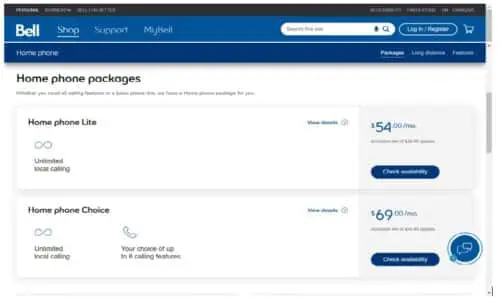
What About Bell, Rogers and Traditional Home Phone?
Traditional home phone isn’t automatically the wrong choice.
It may make sense if you prefer keeping several household services with one provider, value a particular type of support, or have requirements already well served by your existing service.
The better question is whether you’re getting enough value for what you’re paying.
If you’re considering switching, don’t try to reproduce every feature printed on your current bill. Identify what you actually use – perhaps your telephone number, voicemail, caller ID and Canada calling – and compare alternatives based on those needs.
Before You Switch Home Phone Providers
Whichever provider you choose, confirm that your existing number can be transferred before ordering, understand how 911 works, check what equipment you’ll need and don’t cancel your existing phone service before your number transfer completes.
We’ve covered the entire switching process separately, including porting, equipment, timelines and what happens while your number is being transferred.
If you’re transferring an existing telephone number, don’t cancel the old service first. Your number normally needs to remain active for the transfer to complete successfully.
⚠️ Keep Your Old Service Active
If you’re transferring an existing telephone number, don’t cancel the old service first. Your number normally needs to remain active for the transfer to complete successfully.How to Switch Home Phone Providers in Canada and Keep Your Existing Number ›
Which VoIP Provider Is Right for You?
The best provider isn’t necessarily the company with the cheapest advertised price or the longest list of features.
It’s the provider that does the things you actually need without making you pay for, or deal with, a bunch of things you don’t.
If you want a straightforward replacement for a traditional home phone, start with residential services such as NetJOI, Fongo Home Phone, Ooma and VoIP Much.
If mobile calling is central to what you want, look more closely at Ooma, Fongo Mobile and softphone-compatible services.
If SMS is essential, eliminate providers that don’t offer it before comparing anything else.
If you’re technically comfortable and want maximum control, VoIP.ms belongs on your shortlist.
And if all you’re trying to do is preserve a longtime telephone number, you may not need a home phone at all.
Considering NetJOI?
NetJOI Digital Home Phone is designed for Canadians who want a simple, modern replacement for traditional home phone.
Keep your eligible existing number or choose a new one. Keep your current Internet provider. Continue using your regular telephone. Then choose the calling option that fits whether you call within Canada, the U.S. or selected international destinations.
And if you don’t really need the physical phone anymore, Keep My Number lets you retain your existing number and manage incoming calls without an ATA or home telephone.
We’re also comfortable saying when NetJOI probably isn’t the right choice. If SMS, an app-first experience or sophisticated PBX functionality is essential to you, another type of VoIP service may fit better.
But if what you’re really saying is:
“I just want to keep my number, keep my regular phone and make home phone simpler.”
That’s exactly what NetJOI Phone is designed to do.
Compare NetJOI Home Phone Plans ›
Frequently Asked Questions About VoIP Providers in Canada
What is the best VoIP provider in Canada?
There isn’t one provider that’s best for everyone. For a straightforward home-phone replacement, consider providers such as NetJOI, Fongo Home Phone, Ooma and VoIP Much. Mobile-app users, people who need SMS and advanced DIY users should compare providers specifically designed for those requirements.
Can I keep my phone number when switching to VoIP?
Usually, yes, provided the number is eligible for transfer and remains active while the transfer takes place. Confirm portability with your new provider before cancelling anything.
Can VoIP call regular home phones and cellphones?
Yes. The person you’re calling doesn’t need VoIP or the same provider. A VoIP service can call ordinary telephone and mobile numbers supported by the provider’s calling network.
Can I make international calls using VoIP?
Yes. International destinations may be included in a calling package or charged by the minute. Compare the countries you actually call and check whether rates differ for mobile and landline numbers.
Can I use my VoIP number on my cellphone?
It depends on the provider. Some offer dedicated mobile apps, while others support third-party softphones. Traditional digital home-phone services may instead allow you to forward incoming calls to your cellphone.
Can I send text messages from a VoIP number?
Some providers support SMS and sometimes MMS; others don’t. If texting, short codes or verification messages matter, confirm the provider’s specific capabilities before transferring your number.
Can I use my existing home telephone?
Usually. Many residential VoIP services use a small ATA adapter to connect a regular analog or cordless telephone to your Internet connection.
Does VoIP work during a power outage?
VoIP generally requires a working Internet connection and electricity for your modem/router and phone equipment. Backup power can help during shorter outages, but you should always understand your provider’s emergency-calling requirements and limitations.
Learn More About Digital Home Phone
How to Switch Home Phone Providers in Canada ›
What Equipment Is Needed for VoIP? ›
Cheap VoIP Home Phone Plans in Canada ›
NetJOI Digital Phone available across Canada
NetJOI Phone is available across Canada and works with any Internet provider. Here are just a few of the cities we serve: Halifax, Sydney, Kingston, Ottawa, Toronto, Vancouver, Saskatoon, Calgary.
We also support many other communities, including Brampton, Mississauga, Markham, Barrie, Peterborough, Windsor, and more across Ontario, Nova Scotia, Alberta, British Columbia, and Saskatchewan.