
If you’re shopping for home Internet in Canada, you may come across a few different network types including cable Internet, FTTN Internet, and fibre. At first glance, they can sound similar. In practice, though, they work differently and can affect the speeds, consistency, and value you get at home.
In this guide, we’ll explain the difference between cable Internet and FTTN Internet in plain language, where each one performs well, and where full fibre (FTTH) fits into the picture today.
If you’re new to home Internet terminology, our Internet Guides Hub covers the basics in plain language.
Key Takeaways
- Cable Internet typically offers higher download speeds than FTTN.
- FTTN uses fibre part of the way, but the final connection to your home still relies on copper phone lines.
- Cable Internet is widely available and can deliver strong performance for most households.
- FTTN performance is often more sensitive to distance and line quality.
- FTTH generally offers the highest long-term performance ceiling, especially for upload speeds.
For many households, the bigger decision is not just cable vs. FTTN – it’s whether the plan gives you the right speed, fair pricing, and a provider you trust.
How these technologies developed
Cable Internet and FTTN Internet both grew out of existing networks that were originally built for other purposes.
Cable Internet evolved from coaxial cable systems first used to deliver television service. Over time, providers upgraded those networks to carry broadband data using DOCSIS standards, turning cable infrastructure into one of Canada’s most widely used Internet delivery platforms.
FTTN developed differently. Telephone companies extended fibre deeper into their networks, but instead of replacing every last-mile connection, they used existing copper phone lines for the final stretch to the home. That made FTTN a practical way to improve speeds without rebuilding the entire access network all at once.
What Is Cable Internet?
Cable Internet uses the same coaxial cable infrastructure that has historically been used for cable television. Over time, that network was upgraded to support broadband data using DOCSIS standards.
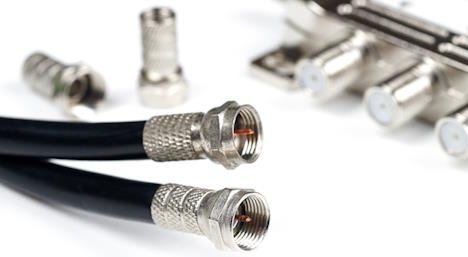
In simple terms, the same general cable infrastructure that once delivered TV channels can also deliver high-speed Internet to your home.
Cable Internet remains one of the most widely available forms of broadband in Canada. It is commonly used by major network owners and by independent Internet providers that access cable infrastructure through wholesale arrangements.
Why cable Internet became so popular
Cable networks were already deeply established in many urban and suburban areas. That made them a practical foundation for expanding Internet access without rebuilding the entire last-mile network from scratch.
Common strengths of cable Internet
- widely available in many cities and towns
- strong download speeds
- suitable for streaming, gaming, remote work, and smart-home use
- not typically affected by your distance from a neighbourhood cabinet in the same way FTTN can be
What Is FTTN Internet?
FTTN stands for Fibre to the Node.
With FTTN, fibre optic cables run from the provider’s core network to a cabinet or node located near a neighbourhood. From there, the final stretch to your home is delivered over existing copper telephone lines.
That means FTTN is partly fibre-based, but it is not the same as full fibre to the home.
This approach helped providers improve broadband speeds without replacing every existing copper line. It was an important step forward from older DSL-only services, especially in areas where fully rebuilding the network would have been slower or more expensive.
Common strengths of FTTN
- broader reach using existing copper infrastructure
- often faster than older legacy DSL services
- can provide solid performance for everyday home use
Common limitations of FTTN
- speeds can drop depending on distance from the node
- line quality matters more
- upload performance is often more limited than cable or FTTH
- the copper last mile creates a lower long-term performance ceiling
Cable Internet vs. FTTN Internet: The Main Differences
Here are the biggest practical differences between cable Internet and FTTN Internet.
1. Speed potential
Cable Internet generally offers a higher speed ceiling than FTTN, especially for download speeds.
FTTN can still work well for many homes, but its reliance on copper for the final leg usually limits how far providers can push speeds consistently across an area.
2. Distance sensitivity
This is one of the biggest differences.
With FTTN, the copper portion of the connection means performance can be affected by how far your home is from the node or cabinet. In general, the farther the copper run, the more challenging it becomes to maintain higher speeds.
Cable Internet does not work the same way. While it is still a shared network, performance is not typically tied to the customer’s distance from a neighbourhood node in the same direct way as FTTN.
3. Upload speeds
Cable Internet has historically offered stronger download performance than upload performance, though modern cable networks have improved over time.
FTTN upload speeds are also limited by the copper last mile and are often lower than what full fibre can provide.
If your household regularly uploads large files, uses cloud backup heavily, livestreams, or depends on large upstream capacity, FTTH usually has the strongest advantage.
4. Shared network vs. copper last mile
Cable Internet is often described as a shared network, meaning customers in an area use shared neighbourhood capacity. In practice, this can affect performance during peak periods, though modern cable networks are generally much better managed than older “everyone slows down at night” stereotypes suggest.
FTTN avoids some of that shared cable architecture, but it introduces another limitation: the final copper leg to the home, which can become the bigger bottleneck.
5. Long-term upgrade path
FTTN was a practical upgrade path in its time, but it has a more limited future than full fibre or advanced cable upgrades. Cable Internet continues to evolve through newer DOCSIS standards, while FTTH represents the cleanest long-term infrastructure path.
“Fibre-powered” marketing does not always mean full fibre to your home. Some services use fibre for part of the journey, but still rely on older copper lines for the final connection.
Quick Comparison Table
| Feature | Cable Internet | FTTN Internet |
|---|---|---|
| Last-mile connection | Coaxial cable | Copper phone line |
| Typical speed ceiling | Higher | Lower |
| Distance sensitivity | Lower | Higher |
| Upload performance | Moderate | Often lower |
| Availability | Widely available | Also widely available in many legacy telco areas |
| Best for | Most households wanting strong everyday performance | Homes in areas where FTTN is the main wireline option |
Where FTTH Fits Into the Picture
FTTH stands for Fibre to the Home.
Unlike FTTN, FTTH uses fibre optic cable all the way to the customer’s premises. There is no copper last mile. That gives FTTH the strongest technical ceiling of the three technologies discussed here.
In real-world terms, FTTH often delivers:
- higher peak speeds
- better upload performance
- more symmetrical speed options
- a cleaner long-term upgrade path
That said, higher headline speeds do not automatically mean every household needs FTTH. Many homes can stream, game, work remotely, and run multiple devices perfectly well on cable Internet.
The more useful question is not “Which technology sounds most advanced?” but “Which service gives me the right mix of speed, reliability, and value for how I actually use the Internet?”
If you’re comparing actual providers rather than just technologies, see our guides to the best Internet providers in Calgary and the best Internet providers in Edmonton.
Which network types are most common in our service areas?
Across NetJOI’s operating footprint, the most common wireline technologies vary by province.
| Province | Most Common Wireline Technologies in NetJOI Service Areas | Practical Market Reality |
|---|---|---|
| Alberta | Cable, FTTH | In many urban areas, cable has long had broad reach, while TELUS fibre has expanded aggressively. |
| British Columbia | Cable, FTTH | Similar to Alberta, with strong cable coverage and significant fibre buildouts in many communities. |
| Ontario | Cable, FTTH, FTTN/DSL | Ontario is more mixed overall, with cable strong in many places, fibre expanding, and FTTN/DSL still relevant in some areas. |
| Nova Scotia | FTTH, Cable | Bell Aliant has deep fibre coverage across much of its footprint, while Eastlink remains a major cable provider with substantial reach. |
In Alberta, British Columbia, and Nova Scotia, many households are really comparing cable vs. full fibre. In Ontario, cable vs. FTTN still matters more often depending on the area.
This matters because the “best” Internet technology often depends less on national marketing and more on what is actually available at your address, how mature the local network is, and whether the provider offers fair pricing and reliable support.
Which Is Better for Most Households?
For many households, cable Internet is often the better balance versus FTTN because it usually offers:
- stronger speed potential
- less sensitivity to distance
- good performance for streaming, gaming, remote work, and everyday family use
FTTN can still be perfectly usable, especially where it is the main wireline option and the line quality is good. But if both are available at a similar price point, cable often has the edge for pure performance.
FTTH, where available and priced reasonably, has the strongest long-term technical advantage. But that does not mean households should overpay for speeds they will never use.
So Which Should You Choose?
A simple rule of thumb:
- Choose cable Internet if you want strong speeds and broad availability.
- Choose FTTN if it is the best wireline option available at your address.
- Choose FTTH if it is available, priced fairly, and you genuinely benefit from the higher upload and long-term performance potential.
For most people, the “best” connection is not the one with the most impressive marketing. It is the one that fits their home, devices, and budget without unnecessary trade-offs.
If you’re not sure how much speed your household actually needs, try our Internet Speed Calculator before comparing plans.
Frequently Asked Questions
Is cable Internet faster than FTTN?
In many cases, yes. Cable Internet usually offers a higher speed ceiling than FTTN, especially for download speeds.
Is FTTN the same as fibre Internet?
No. FTTN uses fibre only part of the way. The final connection to your home still runs over copper phone lines.
Is FTTH better than cable Internet?
Technically, FTTH has the stronger long-term ceiling, especially for upload speeds. But many households will find that cable Internet is already more than sufficient for everyday use.
Does distance affect cable Internet the same way it affects FTTN?
Not in the same direct way. FTTN performance is more sensitive to the copper distance between your home and the node.
Which Internet type is best for streaming and working from home?
Cable Internet and FTTH are both strong choices for most streaming and work-from-home households. FTTN can also work well, but it depends more heavily on line quality and distance.
Final Thoughts
Cable Internet and FTTN Internet both played major roles in expanding broadband access across Canada. But they are not equal in how they perform.
For many households, cable Internet offers a better mix of speed and consistency than FTTN. FTTH sits above both in terms of pure technical potential, but real-world value still depends on pricing, availability, and what your household actually needs.
If you’re comparing providers rather than just technologies, you may also find these guides helpful: