You’ve had the same phone number for years. Family and friends know it, customers or businesses may have it, and changing it everywhere would be a hassle.
But maybe you’re paying too much for the service attached to it. Maybe you barely use that service anymore. Maybe you’re moving, consolidating phone services, or simply looking for a better option.
You want to get rid of the service, not the number.
Fortunately, those are two different things.
Depending on what you want your number to do next, you generally have four options:
| What you want | Option |
|---|---|
| Preserve the number for later | Park it |
| Keep receiving calls without keeping another phone | Forward it |
| Keep making and receiving calls, but lower the cost | Move it to VoIP |
| Use the number with another phone service | Move it to another provider |
Let’s look at the differences.
Option 1: Park It – Preserve the Number for Later
If you don’t need to use the number right now but don’t want to lose it, number parking may be an option.
Number parking generally means transferring the number to a service that holds it for you. The number isn’t being used as a normal active phone line, but it remains yours rather than being released and potentially reassigned.
This can make sense if you’re moving temporarily, taking a break from a service, preserving a business number, or simply aren’t sure what you want to do with the number yet.
The limitation is straightforward: parking is primarily about preserving the number, not using it.
If you still want people who call that number to reach you, forwarding may be a better fit.
Option 2: Forward It – Keep the Number and Keep Receiving Calls
What if you don’t need the old phone service at all, but you do want people to keep calling the number they’ve always used?
Instead of parking the number, you can transfer it to a service that supports call forwarding.
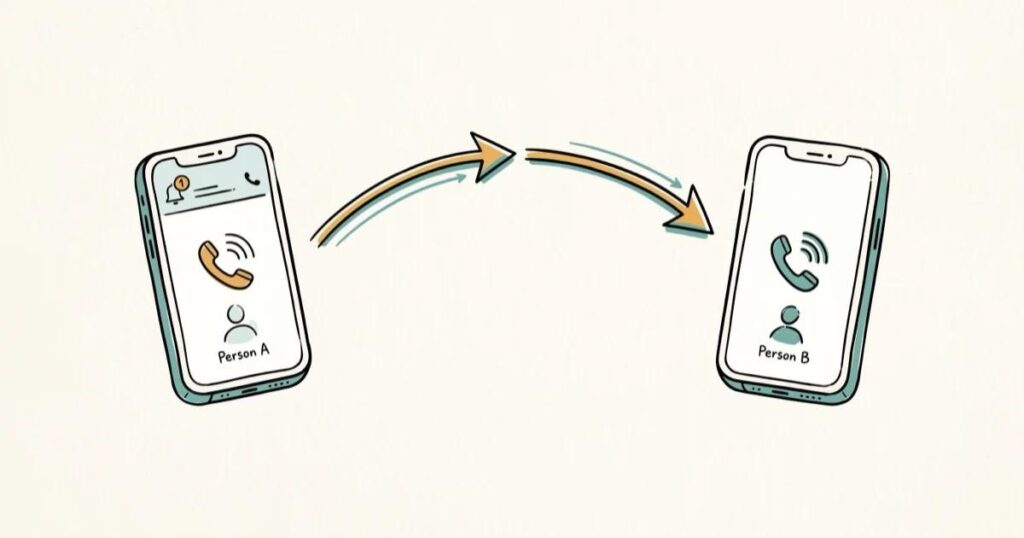
Someone calls your existing number → the call is forwarded → another phone rings. That could be your cellphone, another Canadian number or, with international calling enabled, a number outside Canada.
That means you can potentially cancel the service you no longer want without maintaining another physical phone just for the sake of keeping its number.
The caller doesn’t need to learn a new number. They call the number they’ve always known; you decide where the call goes.
This can be especially useful when the number itself has more value to you than the service currently attached to it.
Option 3: Move It to VoIP – Keep the Phone Service, Lose the Expensive Bill
Maybe you don’t actually want to give up phone service.
You just want to get rid of the bill.
Suppose you’re paying $60 per month for traditional home phone service because you don’t want to lose the number.
Instead, you could potentially transfer that number to a lower-cost VoIP provider.
For example, moving from a $60/month home phone service to an $11.95/month VoIP plan saves $48.05 every month, while letting you keep the number and continue making and receiving calls.
You can still have familiar features such as caller ID, voicemail and call forwarding, depending on the provider and plan.
If you’re using a traditional telephone, you can also usually continue using it with a compatible VoIP adapter.
So if cost is the reason you’re thinking about giving up your phone service, compare the cost of VoIP before giving up the service altogether.
Want to understand why VoIP can cost so much less? See our Cheap VoIP Home Phone Plans in Canada guide.
Wondering what hardware is involved? See our VoIP Equipment Guide.
Option 4: Move It to Another Phone Provider
You can also transfer an eligible number to another provider and continue using it as an active telephone number there.
That could mean moving it to:
- a mobile provider;
- another home phone provider; or
- another VoIP provider.
Moving the number to mobile can be particularly attractive if you want to eliminate a separate home phone service and use the number on your cellphone instead.
There’s one potential complication: what if you already have a cellphone number you want to keep too?
Some phones and mobile providers support dual SIM or eSIM configurations that can allow two numbers on the same cellphone. Check compatibility and pricing with the mobile provider before transferring the number.
What If You Want to Keep the Number, But Don’t Need Another Phone?
This is where forwarding becomes particularly interesting. If you’re not trying to preserve a traditional home-phone experience, you may not need another physical telephone or an ATA adapter at all.
With NetJOI’s Keep My Number option, an eligible number can be transferred to NetJOI and kept active for incoming calls. Instead of connecting a phone, you decide how those calls should be handled.
Forward Calls to Another Number
Your old number can forward incoming calls to another number you already use.
For example:
Someone calls your longtime number → your cellphone rings.
From the caller’s perspective, very little has changed.
Can I Forward My Number Outside Canada?
Yes. Yes. If you’re moving or living outside Canada, you don’t necessarily have to give up your Canadian phone number.
This can be useful if you’re moving or living outside Canada but still want family, friends, customers or other contacts to reach you through your Canadian number.
International forwarding requires international calling to be enabled on your account. You can choose a monthly international calling allowance of $5, $10 or $20, and calls are charged against that allowance based on the calling rate for the destination.
For example, someone living in India could keep their Canadian number with NetJOI and have incoming calls forwarded to their number in India.
If you don’t need calls to reach you immediately, there’s another option: keep the Canadian number and use voicemail-to-email instead. Callers can leave a message and you can receive it by email wherever you are, without paying international forwarding charges.
Use Voicemail
If you don’t want every call forwarded, voicemail gives callers somewhere to leave a message without requiring you to maintain another physical phone.
Get Voicemail by Email
Voicemail-to-email can make an old number even easier to maintain.
When someone leaves a message, you can receive it through email rather than regularly checking a separate telephone or voicemail box.
Combine Call Handling
Depending on how you want calls handled, forwarding and voicemail don’t necessarily have to be an either/or choice.
For example, calls can be routed according to your call-handling settings, with unanswered calls ultimately reaching voicemail.
If the number matters more than the service currently attached to it, you may not need another phone at all. Keep the number active and decide where its incoming calls should go.
Can You Make Calls From a Forwarded Number?
There’s an important difference between receiving forwarded calls and using the number to make calls.
If your old number forwards to your cellphone, someone can call the old number and reach you there.
But when you make a normal call from your cellphone, your cellphone number will generally be the number the other person sees.
If you want to make and receive calls using the transferred number, full VoIP service may be a better option than simply forwarding it.
This is one of the main differences between the choices:
Parking preserves the number.
Forwarding keeps incoming calls reaching you.
Full VoIP lets you actively make and receive calls with the number.
How Do You Transfer a Number You Want to Keep?
Whether you’re parking, forwarding or moving the number to another phone service, the number normally needs to be ported from your existing provider.
The most important rule is:
Don’t cancel the existing service first.
The number should remain active while the transfer is taking place. Your new provider initiates the transfer using information from your existing account.
You’ll generally need information such as:
- the phone number being transferred;
- account holder’s name;
- service or billing address; and
- account number or other identifying information.
Using a recent bill can help ensure the information matches.
For a home phone number, allow at least three business days for the transfer and potentially longer depending on the providers and circumstances.
Your new provider should also confirm that the number is eligible to transfer before the process begins.
If you want to keep your number, don’t cancel the service currently holding it before the transfer is complete. Transfer the number first, then deal with any remaining service or account with your old provider.
What About 911?
If you move the number to a full VoIP phone service, 911 works differently than it does with a traditional landline, including how your service address is registered.
See our VoIP 911 and E911 Guide for a full explanation.
If you’re simply forwarding incoming calls to another phone, that doesn’t change how you place emergency calls from the phone you’re actually using.
Which Option Is Best for Keeping Your Number?
It comes down to what you want the number to do.
| If you want to… | Consider… |
|---|---|
| Keep the number so you don’t lose it | Park it |
| Keep receiving calls without another phone | Forward it |
| Keep making and receiving calls while reducing your phone bill | Full VoIP |
| Use the number with another phone service | Move it to another provider |
You don’t necessarily have to keep paying for a service you no longer want just because you want to keep the number attached to it.
Preserve it, forward it, move it to lower-cost VoIP, or take it somewhere else.
If forwarding sounds like the right fit, NetJOI’s Keep My Number option lets you preserve an eligible Canadian number and keep its incoming calls reaching you, without necessarily keeping another physical phone.